

The Frontcountry:

Ski Areas That Allow Uphill Skiing in North America
Groomers at six in the morning. A lap after the lifts shut down. Mellow slopes without the risk of avalanche terrain. You don't need an avalanche course, a second setup, or a friend who knows more than you. Touring adapters, skins and the skis already in your garage will do.
The map below shows where you can go skinning uphill at ski areas across the US and Canada, when you can go, what it costs, and who'll show you how the first time.
Every resort, every policy we could track down, updated as the rules change.
The Frontcountry Map
Last Updated: Oct. 18, 2026. This map is updated often but some resorts change policies each season and sometimes daily. Call the ski area for the current status. Submit an update or new listing.
Quick Answers


Where the Frontcountry Ends
Everything on this map sits inside a ski area boundary, on routes the resort has approved. That's the frontcountry.
Resorts still have hazards after hours. Winch cats run cables across slopes. Snowmaking guns fire without warning. Avalanche control work happens before opening. Obey every closure and check-in with the resort before going.
Past the rope is a different place. Out there the checklist stops being a wall and becomes the honest price of admission. Take the course. Carry a beacon, shovel and probe. Go with people who know more than you. Start Here: National Avalanche Center
A few guided programs listed here start at a resort and ski out the gate. Do your research to plan accordingly.
Skin Uphill on the Skis You Already Own
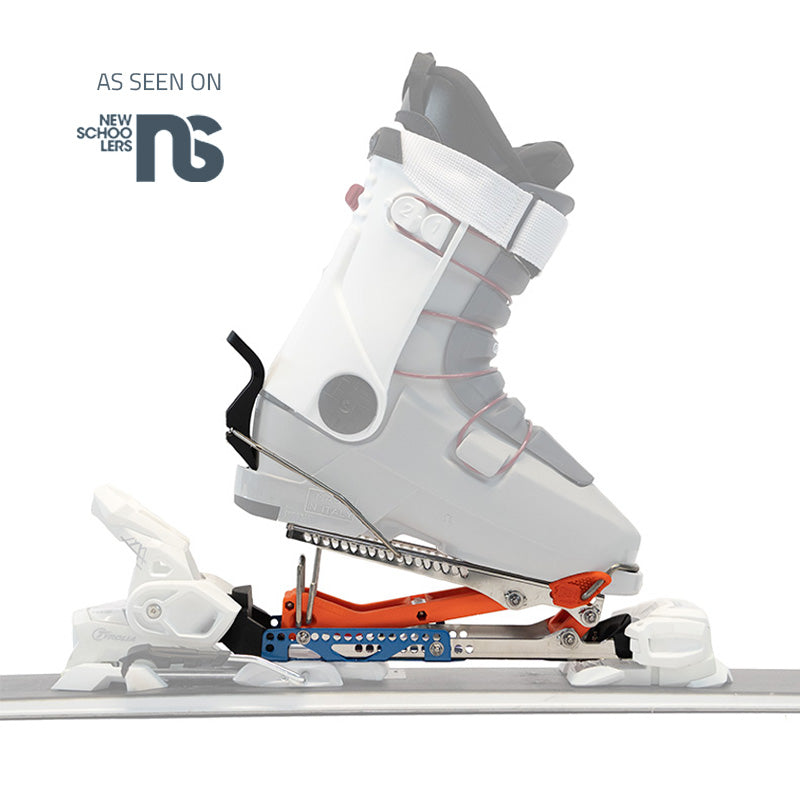
The Daymaker adapter clips to the boots you own and clicks into the bindings you own. Your heel comes free on the way up. Toss the adapter in your pack for the way down. Enjoy skiing downhill in the gear you love.
Add skins and you're done.
Frequently asked questions
Find answers to common questions below.
Uphill skiing is climbing a ski slope under your own power using touring equipment before descending it.
We created this Frontcountry Map as a national uphill access directory but policies do vary by resort, so check each resort's current uphill access rules before visiting.
Most uphill skiers use touring skis or splitboards with specialized bindings, climbing skins and the appropriate safety equipment.
Our adapters allow you to tour uphill in the gear you already own.
Follow the resort's posted schedule and avoid closed terrain, grooming operations, and avalanche mitigation areas.
At a lot of resorts, yes. Others charge anywhere from $5 a year to about $110 a season, and some count your regular season pass.
Yes. Always review the resort's current uphill policy, permitted routes, hours, and registration requirements.
Stay visible, travel in permitted areas, follow posted signs, and respect grooming and maintenance operations. Avalanche gear is not required for most dedicated uphill paths on resort terrain but it never hurts to practice.
Yes, with a touring adapter. It clips to your boots and into your bindings, freeing your heel for the climb. Coming down, you ski your own alpine binding.
Regional Lists
A quick reference for ski areas that allow uphill in each region.
51 ski areas in New England allow uphill travel, some free and some with an uphill pass: Attitash Mountain Resort, Berkshire East, Big Moose Mountain, Black Mountain, Black Mountain of Maine, Bolton Valley Resort, Bousquet Mountain, Bretton Woods, Bromley Mountain, Burke Mountain Resort, Camden Snow Bowl, Cannon Mountain, Cranmore Mountain Resort, Crotched Mountain, Dartmouth Skiway, Dutch Hill, Granite Gorge, Gunstock Mountain Resort, Jay Peak Resort, Jiminy Peak, Killington Resort, King Pine, Loon Mountain, Lost Valley, Mad River Glen, Magic Mountain, Middlebury Snow Bowl, Mohawk Mountain, Mount Snow Resort, Mt. Abram Ski Area, Mt. Sunapee, Okemo Mountain Resort, Pats Peak, Pico Mountain, Pleasant Mountain (formerly Shawnee Peak), Ragged Mountain Resort, Saddleback Mountain, Saskadena Six, Ski Butternut, Ski Quechee (Quechee Club), Smugglers' Notch Resort, Stowe Mountain Resort, Stratton Mountain Resort, Sugarbush Resort, Sugarloaf, Sunday River, Tenney Mountain, Wachusett Mountain, Waterville Valley Resort, Whaleback Mountain, Wildcat Mountain.
9 ski areas in New York and Pennsylvania allow uphill travel, some free and some with an uphill pass: Camelback Mountain, Catamount Mountain Resort, Greek Peak, Hunter Mountain, Seven Springs, Swain Ski Area, Titus Mountain, Whiteface Mountain, Windham Mountain.
Open the map above for each resort's hours, routes and pass price.
24 ski areas in Colorado allow uphill travel, some free and some with an uphill pass: Arapahoe Basin, Aspen Highlands, Aspen Mountain, Beaver Creek, Breckenridge, Buttermilk, Copper Mountain, Crested Butte, Cuchara Mountain Park, Echo Mountain, Eldora Mountain, Howelsen Hill, Keystone, Loveland Ski Area, Monarch Mountain, Powderhorn Mountain Resort, Ski Cooper, Snowmass, Steamboat Ski Resort, Sunlight Mountain Resort, Telluride Ski Resort, Vail Ski Resort, Winter Park Resort, Wolf Creek Ski Area.
9 ski resorts in Utah allow uphill travel, some free and some with an uphill pass: Alta Ski Area, Beaver Mountain, Brighton Resort, Nordic Valley, Park City Mountain, Powder Mountain, Snowbasin Resort, Snowbird, Solitude Mountain Resort.
Open the map above for each resort's hours, routes and pass price.
6 ski areas in California and Nevada allow uphill travel, some free and some with an uphill pass: Diamond Peak, Heavenly, Kirkwood, Lee Canyon, Mammoth Mountain, Sugar Bowl.
4 ski areas in New Mexico allow uphill travel, some free and some with an uphill pass: Pajarito Mountain Ski Area, Sandia Peak, Ski Santa Fe, Taos Ski Valley.
Open the map above for each resort's hours, routes and pass price.
12 ski areas in Montana, Idaho and Wyoming allow uphill travel, some free and some with an uphill pass: Big Sky Resort, Bogus Basin, Grand Targhee, Great Divide, Jackson Hole Mountain Resort, Montana Snowbowl, Pebble Creek, Red Lodge Mountain, Snow King Mountain, Sun Valley Resort, Tamarack, Whitefish Mountain Resort.
11 ski areas in Oregon and Washington allow uphill travel, some free and some with an uphill pass: Alpental / The Summit at Snoqualmie, Cooper Spur Mountain Resort, Crystal Mountain, Mission Ridge, Mt. Ashland, Mt. Bachelor, Mt. Baker, Mt. Hood Meadows, Mt. Spokane, Stevens Pass, Timberline Lodge.
Open the map above for each resort's hours, routes and pass price.
4 ski areas in the Midwest allow uphill travel, some free and some with an uphill pass: Boyne Mountain, Buck Hill, Mount Bohemia, Spirit Mountain.
Open the map above for each resort's hours, routes and pass price.
2 ski areas in Alaska allow uphill travel, some free and some with an uphill pass: Alyeska Resort, Eaglecrest.
Open the map above for each resort's hours, routes and pass price.
3 ski resorts in Quebec allow uphill travel, some free and some with an uphill pass: Centre Vorlage, Le Massif de Charlevoix, Mont-Tremblant.
Open the map above for each resort's hours, routes and pass price.
9 ski resorts in British Columbia and Alberta allow uphill travel, some free and some with an uphill pass: Banff Sunshine Village, Fernie Alpine Resort, Kicking Horse Mountain Resort, Lake Louise Ski Resort, Marmot Basin, Red Mountain Resort, Revelstoke Mountain Resort, Sun Peaks Resort, Whistler Blackcomb.
Open the map above for each resort's hours, routes and pass price.